 Hisser Lab
 Buy on Amazon
Do hissing cockroaches live in groups?
Hissers are not loners. They cluster together, the males sort out a pecking order, and they signal to each other by smell, touch, and sound.

At a glance
Madagascar hissing cockroaches (Gromphadorhina portentosa) are gregarious: they aggregate in groups under bark and leaf litter rather than living alone, and they tolerate crowding in captivity. Within a group, adult males compete for status and shelter and settle into a dominance hierarchy, sorted out by shoving with their horns and by hissing. They communicate through three channels, smell (chemical signals), touch (antennation), and sound (the hiss), but they are not eusocial: there are no castes, no workers, and no queen, so they have a social life without a true colony.
- Social structure
- Gregarious aggregations, not a eusocial colony
- What groups them
- Shared shelter plus chemical cues (aggregation signals)
- Among males
- Dominance hierarchies; contests over rank and shelter
- Communication
- Smell (chemical), touch (antennation), sound (the hiss)
- Division of labor
- None, no castes (unlike ants and termites)
Do they live in groups?
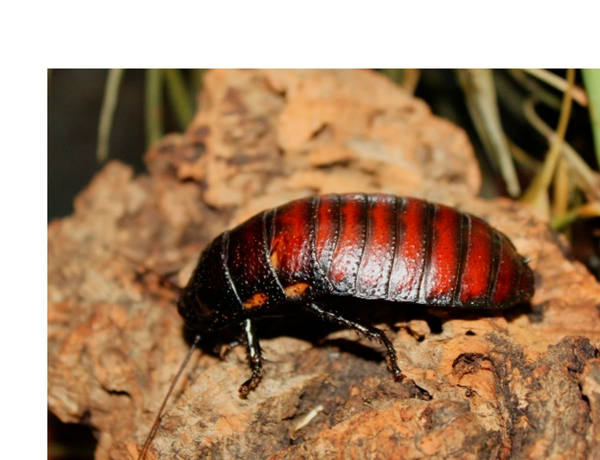
In the wild, Madagascar hissing cockroaches live on the rainforest floor, under logs, bark, and leaf litter, clustered together rather than spread out evenly.[1] They are gregarious: individuals tolerate, and may actively prefer, the company of others, which is why keepers routinely house many in one enclosure without the constant fighting that solitary species show when forced together.[1]
What pulls a group together is mostly the environment. A warm, humid, dark shelter is a scarce resource worth sharing, so roaches pile into the same good spots. Studies of the closely related giant hisser (Gromphadorhina oblongonota) show that these roaches move away from light and actively seek contact with surfaces and each other, which packs them into shared dark refuges (Figure 1).[2]
Many other cockroaches add a chemical layer to this, leaving scent cues that mark a resting site as good, but whether G. portentosa uses such aggregation cues has not been directly tested.
Is there a pecking order among the males?
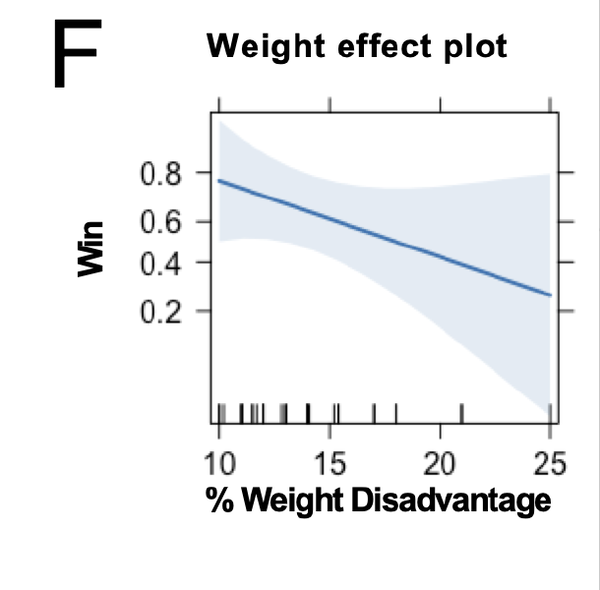
Living in a group does not mean living in peace. Adult males compete for status, for the best shelter, and for access to females, and they settle these contests with ritualized fights: they face off, push and ram each other with the raised bumps on the thorax (the "horns"), and hiss.[3] Larger males with bigger horns tend to win (Figure 2), and over repeated encounters a group of males settles into a dominance hierarchy, a rough ranking that decides who controls space and who backs down.[3][4]
The hiss is woven into this. Dominant males hiss more than subordinate ones, and the sound carries rough information about a male's size, which can let a smaller male yield before a fight turns physical.[5] For the mechanics of the fights and the horns, see the deep dive on male combat and horns; for the sound itself, see how the hiss works.
How do they communicate?
Hissing cockroaches use at least three channels. The first is smell. Their surface is coated with a species-characteristic blend of waxy cuticular hydrocarbons, the same kind of compounds that in many insects carry information about species and sex.[6] In G. portentosa these waxes have been studied mainly for how they help the feet stick, and whether the roach actually reads them as signals to tell male from female or group-mate from stranger has not been shown directly.[6]
The second is touch. Roaches constantly sweep their long antennae over surfaces and over each other, and this antennation is how they inspect a neighbor at close range. The third is sound, the hiss, which males use in combat and courtship and which both sexes give when disturbed.[5] The channels work together: a courting male, for example, both hisses and makes antennal contact with the female.[5]
Do mothers look after their young?
Hissing cockroaches give birth to live young: the egg case is carried and hatches inside the female, a pattern called ovoviviparity, so newborn nymphs emerge directly into the group rather than from a hidden egg case left behind.[7] Newborn nymphs are often found close to the mother and clustered with their siblings in the hours and days after birth.[7]
How much of this is active maternal care, and how much is simply the mother and her nymphs sharing the same favored shelter, is not firmly settled, and we flag it as an open question below.[7] For how live birth works, see the deep dive on ovoviviparity.
Are they social the way ants and termites are?
No, not in the strict sense. Ants, termites, and honeybees are eusocial: they live in colonies with overlapping generations, cooperative care of the young, and a reproductive division of labor into castes such as queens and workers. Hissing cockroaches have none of that, no workers, no queen, no sterile helpers.[1] They are gregarious and they form dominance relationships, which is a simpler kind of social life: living together, signalling, and sorting out rank, but without a colony.
There is a nice twist for the classroom here. Termites, the textbook example of insect society, are themselves highly modified social cockroaches, nested deep inside the cockroach family tree. So the roach lineage did evolve full sociality, just not in the branch that gave us the hisser.
Open questions
Is an aggregation a real social preference, or just everyone seeking the same shelter?
Roaches cluster, but it is hard to separate two causes: an active preference for being near other roaches, versus many individuals independently choosing the same warm, humid, dark spot. Choice tests, offering roaches a shelter that already holds group-mates versus an identical empty one, or an empty shelter versus one scented with the smell of other hissers, would show how much of the clustering is genuinely social.[2]
How much do mothers actually care for their newborns?
Newborn nymphs are seen near the mother, but "near the mother" is not the same as care. It is not clear whether the female does anything for the brood, such as guarding or sheltering them, beyond sharing a refuge. Tracking marked females and their nymphs over time, and testing whether nymphs survive better with the mother present, would settle it.[7]
Can a hisser recognize individuals, not just male versus female?
Chemical and acoustic cues can plausibly carry sex and rough size, but whether a roach can tell one specific individual from another, a true individual recognition, is unsettled. It would take controlled tests, for instance pairing a roach repeatedly with the same versus a novel partner and watching whether it treats them differently.[6]
References
- Durrant KL, Skicko IM, Sturrock C, Mowles SL (2016). Comparative morphological trade-offs between pre- and post-copulatory sexual selection in giant hissing cockroaches (Tribe: Gromphadorhini). Scientific Reports. PubMed
- Free D, Wolfensohn S (2023). Assessing the welfare of captive group-housed cockroaches, Gromphadorhina oblongonota. Animals. PubMed
- Young JJ, Craven CA, Koenig JA, Addemir M, He BZ, Miakotina OL, et al. (2026). Combat behaviors predictive of fight outcome in Gromphadorhina portentosa. microPublication Biology. PubMed
- Logue DM, Takahashi AD, Cade WH (2011). Aggressiveness and size: a model and two tests. The American Naturalist. PubMed
- Clark DC, Moore AJ (1995). Genetic aspects of communication during male-male competition in the Madagascar hissing cockroach: honest signalling of size. Heredity. PubMed
- Gerhardt H, Betz O, Albert K, Lämmerhofer M (2016). Insect adhesion secretions: similarities and dissimilarities in hydrocarbon profiles of tarsi and corresponding tibiae. Journal of Chemical Ecology. PubMed
- Yoder JA, Glenn BD, Benoit JB, Zettler LW (2008). The giant Madagascar hissing-cockroach (Gromphadorhina portentosa) as a source of antagonistic moulds: concerns arising from its use in a public setting. Mycoses. PubMed
This deep dive backs the group-housing guidance in the care guide.
Short, cited reads from the lab.