 Hisser Lab
 Buy on Amazon
How to care for a Madagascar hissing cockroach
Everything you need for a healthy hisser, from unboxing day to a five-year-old colony elder. Short sections and clear field notes.
Printable: Care card (PDF) · Quick-start & maintenance sheet (PDF)
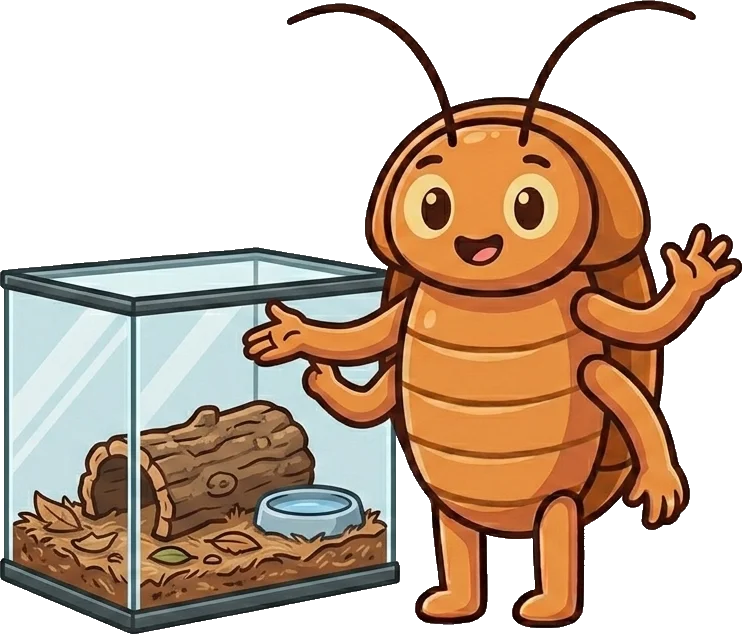
Quick facts
- Say it
- grom-FAY-doh-REE-nuh por-ten-TOE-suh
- Care level
- Easy, very forgiving
- Adult size
- 2 to 3 inches
- Lifespan
- 2 to 5 years
- Temperature
- 72 to 85 °F
- Humidity
- Moderate (50 to 70%)
- Climbs?
- Yes, use a barrier
- Flies?
- No, wingless
- Origin
- Madagascar
Getting started
New to hissers? Open each step below. This is your first week, start to finish.
Before your hisser arrives
Set the tank up a day ahead so it is warm and ready. You need a 5 to 10 gallon tank with a secure ventilated lid, 1 to 2 inches of coconut fiber or aspen bedding, a piece of cork bark or egg carton to hide under, and a water-gel dish. Run a thin band of petroleum jelly around the top inside edge so nobody climbs out.
Day 1: unboxing
Open the box indoors, away from sun and cold drafts. Move your hisser gently into the tank and add a slice of carrot or apple. Then leave it alone for the rest of the day. A new hisser needs a quiet day before it is ready to meet you.
The first week: settling in
Keep the room between 72 and 85 °F. Offer fresh food every two or three days and take out anything uneaten within 48 hours. Mist lightly if your home is dry. Try your first handling after a couple of quiet days: hold low over a table with two cupped hands. A hiss is normal and fades as your hisser gets used to you.
Your weekly routine
Plan on about 10 to 15 minutes a week. Refresh food and water, spot-clean any mess, and check the petroleum-jelly band. Do a full bedding change about once a month. Wash your hands after handling or cleaning.
When something looks off
A ghost-white hisser just molted and is fragile, so look but do not touch until it browns up. Tiny pale mites are normal hitchhikers and need no treatment. A musty smell or heavy condensation means you need more airflow and less misting.
Overview & natural history
The Madagascar hissing cockroach (Gromphadorhina portentosa) is a large, wingless, slow-moving forest insect from the island of Madagascar, where it recycles fallen fruit and leaf litter on the forest floor. It is docile, hardy, and long-lived, which is why universities, zoos, and classrooms have used it for decades as a first hands-on animal.
Hissers are not household pests. They cannot survive a temperate winter outdoors and cannot establish themselves in a normal home: breeding requires sustained tropical warmth and humidity.
How the hiss works
Hissers are one of very few insects that make sound by breathing. The hiss is a forced push of air through a modified pair of breathing holes (spiracles) on the abdomen, not a buzz of wings or a chirp of legs. Three hisses to listen for:
- The startle hiss. A sharp alarm when disturbed, the one you’ll hear first.
- The combat hiss. Males face off, horn to horn, hissing to claim a perch.
- The courtship hiss. Quieter, used by males during courtship.
A startled hiss is loud on purpose, and it has been shown to deter predators. Most hand-raised hissers stop startle-hissing once they know you.
Field notes
 Field note · The mites are normal
You may spot tiny pale mites riding on your hisser. These hitchhikers are generally considered harmless commensals. They live on crumbs, don’t bite, and won’t infest your home or harm people or pets. No treatment needed.
A hisser that suddenly looks ghost-white has just molted, and its new exoskeleton needs hours to harden. It is fragile and stressed. Look and photograph if you like, but don’t touch until it browns up.
A few states and territories restrict this species. We don’t ship to Florida, Hawaii, or U.S. territories. Elsewhere, check your state’s rules before ordering — we won’t ship where it’s prohibited.
Males vs. females
Easy to tell apart, which kids love:
- Males have two bumpy “horns” on the pronotum (the shield behind the head) and bushier antennae. They use the horns in shoving matches.
- Females have a smooth, rounded pronotum and tend to grow a bit larger and heavier.
Why keep them
- Forgiving for beginners, and hard to harm with normal care.
- Safe: no bites, no stings, no flying, no smell with basic upkeep.
- A live lesson in incomplete metamorphosis, behavior, and adaptation.
- Long-lived: 2 to 5 years, so one animal stays with a class across school years.
- Quiet, cheap, and low-maintenance: minutes per week, pennies per day.
Care & setup
Enclosure
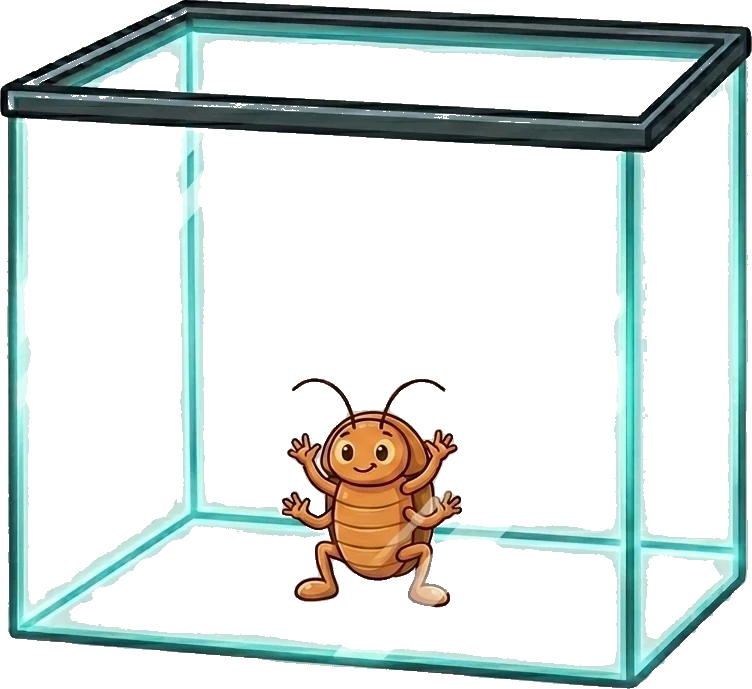
A 5 to 10 gallon glass or plastic tank houses a few adults comfortably. Hissers can climb smooth surfaces, so use a secure ventilated lid and a 2-inch band of petroleum jelly around the top inside edge as a no-climb barrier.
Temperature
Room temperature works: aim for 72 to 85 °F. They’re sluggish below about 70 °F and breed only at the warm end, which is a useful dial for classrooms that do not want babies.
Humidity
Moderate, 50 to 70%. A light misting once or twice a week in dry climates is plenty. Keep it damp, never swampy. Good ventilation matters more than precise numbers.
Substrate
1 to 2 inches of coconut fiber or aspen shavings. Avoid cedar and pine (the aromatic oils irritate insects). Spot-clean weekly and do a full change monthly.
Hides & structure
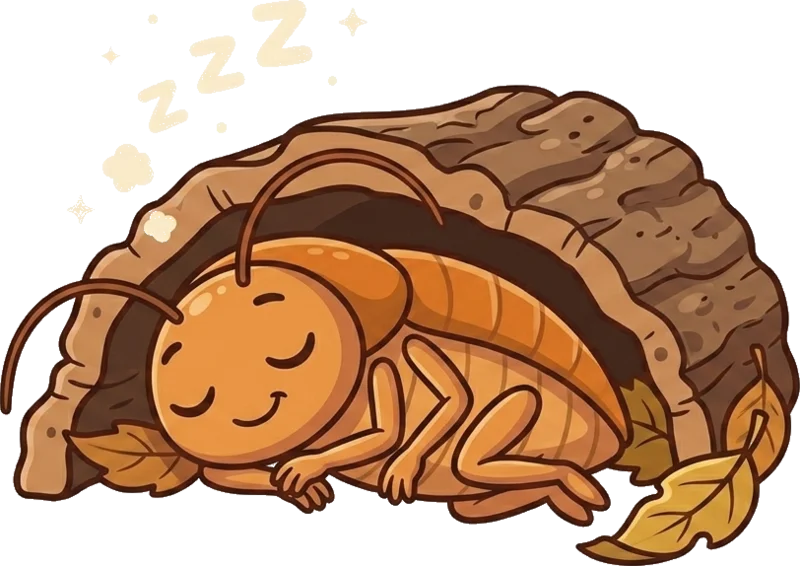
Cork bark, egg-carton pieces, or a half log. Hissers are nocturnal and feel safest with a dark place to wedge into during the day. More hides means more natural behavior.
Food
Fresh produce 2 to 3 times a week (carrot, apple, leafy greens, banana peel), plus a protein boost like dry dog kibble. Remove uneaten fresh food within 48 hours. Oranges are a famous favorite.
Water
No open water dish (nymphs can drown). Use a water-gel crystal dish or a shallow lid with a soaked cotton ball or sponge, refreshed every couple of days.
Ventilation
A mesh lid section or ventilation holes keeps air moving and mold away. If the tank smells musty or condensation builds, increase airflow and reduce misting.
Breeding & life cycle
Hissers grow by incomplete metamorphosis. There is no caterpillar and no chrysalis. A nymph is a tiny, wingless version of the adult that molts about six times over several months, each time emerging soft and white before darkening. Compare that to the butterfly your class already knows: egg, larva, pupa, adult is complete metamorphosis; the hisser’s egg, nymph, adult is the other great pattern in insects.
Females are ovoviviparous: eggs are carried internally in an egg case (ootheca) until they hatch, so the female appears to give “live birth” to 20 to 40 nymphs. For older students, the precise phrasing matters: the eggs hatch inside, which is not the same as mammalian live birth.
Want zero babies in a classroom colony? Keep it cooler (low-to-mid 70s °F) or keep a single-sex group. Males-only colonies are common in schools.
Receiving & acclimation
- Unbox promptly, indoors, away from direct sun or cold drafts.
- Place the hisser in its prepared enclosure and give it a quiet day before handling.
- First handling: low over a table, two cupped hands, slow movements. Expect a hiss. That’s a healthy startle reflex, and it fades with gentle routine.
- Wash hands after every handling session.
- Never release a hisser, or any classroom animal, into the wild. If you need to rehome, ask a teacher, 4-H club, or local invertebrate keeper. We can help.
At-a-glance checklist
| Question | Answer |
|---|---|
| Does it fly? | No, completely wingless. |
| Does it bite or sting? | No. |
| Does it climb glass? | Yes, so use a lid plus a petroleum-jelly band. |
| Does it smell? | No, with weekly spot-cleaning. |
| Will it breed? | Only when warm (low 80s °F) with both sexes present. |
| Can it infest my house? | No. It can’t survive or breed in home conditions. |
| Time per week? | About 10 to 15 minutes. |
Sources
We cite primary and university sources by name. Everything above is researched and written from that literature by a UT Austin scientist.
- Oklahoma State University Extension: Madagascar Hissing Cockroaches, Information and Care
- University of Michigan Animal Diversity Web: Gromphadorhina portentosa
- Oxford Bioscience Horizons: function of the disturbance hiss
Ready for a hisser of your own?
Pairs, colonies, and nymph packs, all with a live-arrival guarantee.