 Hisser Lab
 Buy on Amazon
Not the roach you’re picturing.
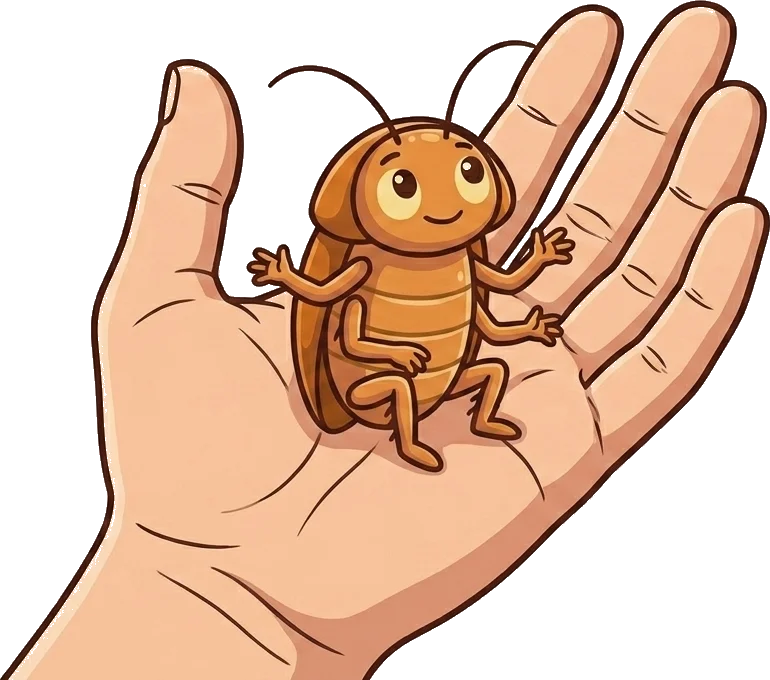
Forget the kitchen-scuttler. The Madagascar hissing cockroach is a slow, gentle, hand-tame forest insect. We think of them as tiny armored tortoises, not pests.

Are they docile?
- They’re docile: no bites, no stings, and slow enough for a five-year-old’s cupped hands.
- They can’t fly. Wingless at every life stage.
- They won’t infest your house. Breeding needs sustained tropical warmth and humidity that homes don’t provide.
- With basic weekly cleaning, the tank stays virtually odor-free.
Wait, they make sounds?
This is one of very few insects on Earth that makes sound by breathing. Crickets rub wings; bees buzz with flight muscles. The hisser forces air through modified breathing holes on its abdomen (the insect version of a snort). It hisses to startle predators, to wrestle rivals, even to court.
It also lives 2–5 years, bears live young (eggs hatch inside the mother, a process called ovoviviparity), and molts six times on its way to adulthood, each time emerging snow-white before its armor browns.

Hear the hiss
This is the sound a hisser makes by forcing air out through a breathing hole when it’s disturbed.
A 10-second disturbance hiss. Curious how it is made without a voice box? See how the hiss works. Recording by Spoxe, released CC0 via Freesound.
Is a hisser right for you?
Best for
- Classrooms and homeschools studying life cycles or behavior
- Kids ready for a first hands-on animal (with adult supervision)
- Families who want a quiet, low-cost, low-time, low-mess pet
Not best for
- Anyone who wants a cuddly pet that plays back
- Homes that can’t accept “it’s still a cockroach” house guests
- Those wanting zero chance of babies while keeping a warm mixed-sex colony
Still curious?
The care guide covers setup and maintenance.