 Hisser Lab
 Buy on Amazon
Are the mites on a hissing cockroach harmful?
Many hissers arrive carrying tiny brown mites. This is the research on what they are and whether they matter, for the roach or for you.

At a glance
Most Madagascar hissing cockroaches (Gromphadorhina portentosa) carry tiny brown mites, usually the species Gromphadorholaelaps schaeferi (also written Androlaelaps schaeferi). These mites are not parasites. They live on the roach and feed on its saliva and food scraps, and they help it by eating mold and preying on harmful mites.[1][2] They are specific to this cockroach and pose no risk to people or pets.[2][3]
- Likely species
- Gromphadorholaelaps schaeferi (NCBI: Androlaelaps schaeferi)
- Typical size
- About 1 mm, brown
- Lives on
- The roach’s underside, near the mouth, legs, and spiracles
- Relationship
- Mutualism (a cleaning symbiont)
- Risk to people/pets
- None (host-specific)
What are these mites?
The mites usually found on the Madagascar hissing cockroach (Gromphadorhina portentosa) belong to a single species, Gromphadorholaelaps schaeferi, which is also listed under the name Androlaelaps schaeferi.[1][2] They are small, about one millimeter long and brown, and gather on the underside of the cockroach, near its mouth, the bases of its legs, and the breathing holes (spiracles) along its body.[1][2] A mite spends its whole life on one cockroach. Larvae, nymphs, and adults live together on the same host, and a new group starts when a single female moves over from a neighboring roach.[1] The mites use chemical cues from the cockroach so they are not shed when it molts. The larva does not feed, passing through an unusually short stage of only six to eight hours before its first molt.[1]
Do they harm the roach?
These mites are not parasites. They do not bite the cockroach or feed on its blood. Instead they feed on its saliva and on food scraps and other debris on its body.[1][2] Most evidence shows they help. They eat mold and organic matter on the cockroach’s shell, which lowers the chance of fungal infection, and they prey on the young of other, harmful mites.[2] Cockroaches that carry the mites move food through their gut more efficiently, and one study found that infested cockroaches lived about nine months longer than those without mites.[2] Because of this cleaning role, the mite has been called an “exterminator mite.”[2]
Very rarely, when many mites crowd into one spot, small patches of damage and inflammation have been seen on the host, so the relationship is best described as mostly helpful with occasional minor harm.[2]
Can they spread to my home, pets, or family?
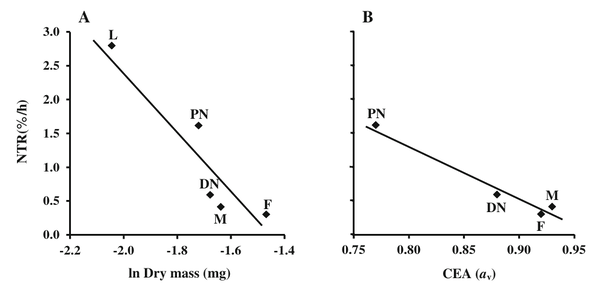
No. Gromphadorholaelaps schaeferi is specific to hissing cockroaches and cannot live away from its host.[1][2] It gets its water from the moist air around the cockroach’s mouth and breathing holes, and it dries out and dies in ordinary household air (Figure 1).[1] It does not infest homes and does not bite or affect people, pets, or other animals; reviews of cockroach health list it as “not of concern.”[2][3] When a host cockroach dies, the mites stay on the body rather than moving onto anything else.[1][2]
What should a keeper or teacher do?
Usually nothing. The mites are a normal part of a healthy hissing cockroach, and because they reduce mold and other pests their presence is often a good sign rather than a problem.[2][3] There is no need to remove them, and scrubbing them off can stress the animal. Normal care, keeping the enclosure clean and not too wet, keeps both the cockroach and its mites in balance.[3] If a cockroach looks unwell, that is a reason to check its housing or ask a veterinarian, not to blame the mites.
Open questions
At what point would the partnership tip toward harm?
On hissing cockroaches the balance sits firmly on the helpful side, but it is not perfectly one-sided. One study found rare yellow spots of dead tissue and patches of inflammation in the legs of animals carrying heavy clusters of mites, signs that were absent in mite-free colonies.[2] What is not known is how many mites it takes, or what conditions trigger that switch. A study that tracked the same animals at different mite densities over time would help pin down the threshold. In other animals the balance clearly shifts with context, so the same is plausible here.[4]
Is it always the same one mite species?
Only one mite, Gromphadorholaelaps schaeferi, is reported again and again on the Madagascar hissing cockroach.[1] But the species riding any given pet-trade animal is hardly ever checked under a microscope, so it is not certain that every hisser carries this same mite and not an occasional look-alike. Collecting and identifying mites from many separate animals and collections would settle whether the partnership is truly one species or several.
Why is so little known about the mite itself?
Most of what we know about this mite comes from a handful of studies, and much of it from a single close look at its water balance and feeding.[1] The mite has no sequenced genome and almost no molecular work, so its exact place on the mite family tree and the details of how it talks to its host chemically are still open. Basic genetic and life-cycle work would fill in a picture that currently rests on very few sources.
References
- Yoder JA, Hedges BZ, Benoit JB, Keeney GD (2009). Role of permanent host association with the Madagascar hissing-cockroach, Gromphadorhina portentosa, on the developmental water requirements of the mite, Gromphadorholaelaps schaeferi. Journal of Comparative Physiology B. PubMed
- Monahan CF, Bogan JE Jr, LaDouceur EEB (2023). Histological findings in captive Madagascar hissing cockroaches (Gromphadorhina portentosa) and a literature review. Veterinary Pathology. PubMed
- Free D, Wolfensohn S (2023). Assessing the welfare of captive group-housed cockroaches, Gromphadorhina oblongonota. Animals. PubMed
- Seeman OD, Walter DE (2023). Phoresy and mites: more than just a free ride. Annual Review of Entomology. PubMed
- Sun SJ, Kilner RM (2020). Temperature stress induces mites to help their carrion beetle hosts by eliminating rival blowflies. eLife. PubMed
This deep dive backs the “The mites are normal” field note in the care guide.
Short, cited reads from the lab.